🚚 Free Worldwide Shipping on All Orders!Shop Now
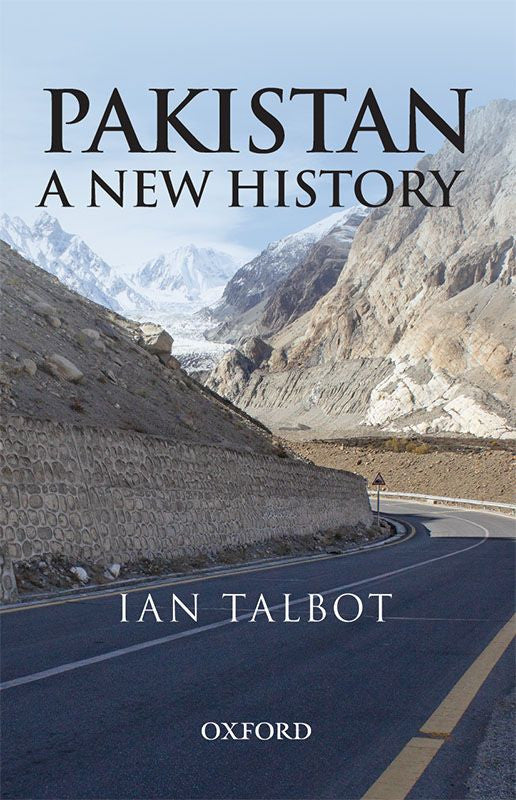
Pakistan: A New History
If Pakistan is to preserve all that is good about the country, it must face the deterioration of its social and political institutions. Sidestepping easy headlines to identify Pakistan’s true dangers, this volume revisits the major turning points and trends of Pakistani history over the past six decades. While Ian Talbot’s study centres on Pakistan’s many failures—the collapse of stable governance, the drop in positive political and economic development, and, most of all, the unrealised goal of a Muslim state as envisaged by the Quaid-i-Azam Mohammad Ali Jinnah—this book unequivocally affirms the country’s potential for a positive reawakening. These failures were not preordained, Talbot argues. His sensitive historical approach makes it clear that favourable opportunities still remain for Pakistan, in which the state has a chance to reclaim its priorities and institutions and re-establish political and economic sustainability.
‘Talbot's judgements are balanced and his words authoritative.'
— Francis Robinson, Professor of the History of South Asia,
Royal Holloway, University of London
'An invaluable guide for navigating and understanding Pakistan's complex, byzantine politics. No other contemporary history of Pakistan comes anywhere near Talbot's understanding and detail of its challenges and missed opportunities.'
— Maleeha Lodhi, Pakistan’s former Ambassador to the US and
editor of Pakistan: Beyond the 'Crisis State' (OUP, 2011)
AUTHOR DESCRIPTION
Ian Talbot is Professor of History at Southampton University and one of Europe’s leading historians of South Asia. Among other publications written and/or edited by him are Divided Cities: Partition and its Aftermath in Lahore and Amritsar, 1947–1957 (OUP, 2006), The Deadly Embrace: Religion, Politics and Violence in India and Pakistan, 1947–2002 (OUP, 2006), and Region and Partition: Bengal, Punjab and the Partition of the Subcontinent (OUP, 2000).
$4.31
Pakistan: A New History—
$4.31
Pakistan: A New History
If Pakistan is to preserve all that is good about the country, it must face the deterioration of its social and political institutions. Sidestepping easy headlines to identify Pakistan’s true dangers, this volume revisits the major turning points and trends of Pakistani history over the past six decades. While Ian Talbot’s study centres on Pakistan’s many failures—the collapse of stable governance, the drop in positive political and economic development, and, most of all, the unrealised goal of a Muslim state as envisaged by the Quaid-i-Azam Mohammad Ali Jinnah—this book unequivocally affirms the country’s potential for a positive reawakening. These failures were not preordained, Talbot argues. His sensitive historical approach makes it clear that favourable opportunities still remain for Pakistan, in which the state has a chance to reclaim its priorities and institutions and re-establish political and economic sustainability.
‘Talbot's judgements are balanced and his words authoritative.'
— Francis Robinson, Professor of the History of South Asia,
Royal Holloway, University of London
'An invaluable guide for navigating and understanding Pakistan's complex, byzantine politics. No other contemporary history of Pakistan comes anywhere near Talbot's understanding and detail of its challenges and missed opportunities.'
— Maleeha Lodhi, Pakistan’s former Ambassador to the US and
editor of Pakistan: Beyond the 'Crisis State' (OUP, 2011)
AUTHOR DESCRIPTION
Ian Talbot is Professor of History at Southampton University and one of Europe’s leading historians of South Asia. Among other publications written and/or edited by him are Divided Cities: Partition and its Aftermath in Lahore and Amritsar, 1947–1957 (OUP, 2006), The Deadly Embrace: Religion, Politics and Violence in India and Pakistan, 1947–2002 (OUP, 2006), and Region and Partition: Bengal, Punjab and the Partition of the Subcontinent (OUP, 2000).
Product Information
Product Information
Shipping & Returns
Shipping & Returns
Description
If Pakistan is to preserve all that is good about the country, it must face the deterioration of its social and political institutions. Sidestepping easy headlines to identify Pakistan’s true dangers, this volume revisits the major turning points and trends of Pakistani history over the past six decades. While Ian Talbot’s study centres on Pakistan’s many failures—the collapse of stable governance, the drop in positive political and economic development, and, most of all, the unrealised goal of a Muslim state as envisaged by the Quaid-i-Azam Mohammad Ali Jinnah—this book unequivocally affirms the country’s potential for a positive reawakening. These failures were not preordained, Talbot argues. His sensitive historical approach makes it clear that favourable opportunities still remain for Pakistan, in which the state has a chance to reclaim its priorities and institutions and re-establish political and economic sustainability.
‘Talbot's judgements are balanced and his words authoritative.'
— Francis Robinson, Professor of the History of South Asia,
Royal Holloway, University of London
'An invaluable guide for navigating and understanding Pakistan's complex, byzantine politics. No other contemporary history of Pakistan comes anywhere near Talbot's understanding and detail of its challenges and missed opportunities.'
— Maleeha Lodhi, Pakistan’s former Ambassador to the US and
editor of Pakistan: Beyond the 'Crisis State' (OUP, 2011)
AUTHOR DESCRIPTION
Ian Talbot is Professor of History at Southampton University and one of Europe’s leading historians of South Asia. Among other publications written and/or edited by him are Divided Cities: Partition and its Aftermath in Lahore and Amritsar, 1947–1957 (OUP, 2006), The Deadly Embrace: Religion, Politics and Violence in India and Pakistan, 1947–2002 (OUP, 2006), and Region and Partition: Bengal, Punjab and the Partition of the Subcontinent (OUP, 2000).