🚚 Free Worldwide Shipping on All Orders!Shop Now
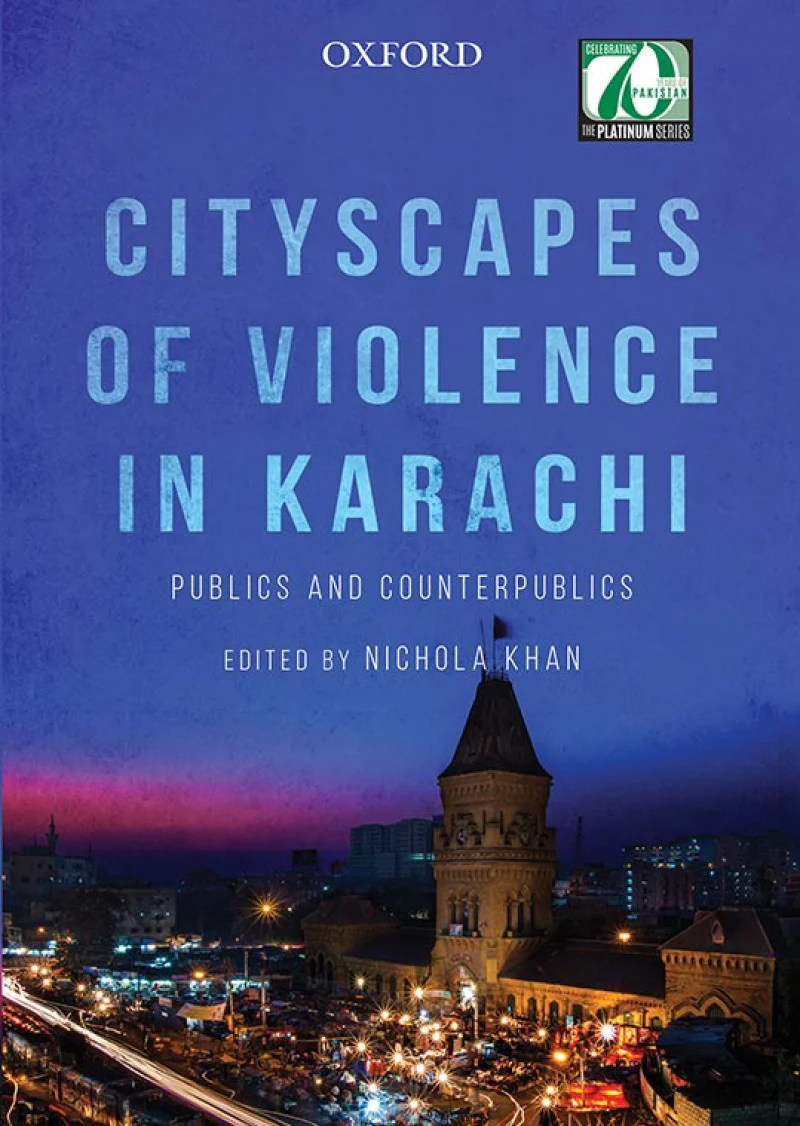
Cityscapes of Violence in Karachi: Publics and Counterpublics
Karachi is a city framed in the popular imagination by violence, be it criminality and gangsterism or political factionalism. That perception also dominates literary, cinematic, and scholarly representations and discussions of this great metropolis.
By commenting in different ways on the trials and tribulations of Karachi and Pakistan, the contributors to this innovative book on the city build on past writings to say something new or different—to enable the reader to
re-think how they understand the processes at work in this vast urban space.
They scrutinise Karachi’s diverse neighbourhoods to show how violence is manifested locally and citywide in protest drinking, social and religious movements, class and cosmopolitanism, gang wars, and how it affects the fractured lives of militants and journalists, among others. Oral history and memoir feature strongly, as do insights gleaned from anthropology and political science.
The contributors include academics, ethnographers, journalists, writers, and activists: Nadeem F. Paracha, Laurent Gayer, Zia Ur Rehman, Nida Kirmani, Nichola Khan, Oskar Verkaaik, Arif Hasan, Razeshta Sethna, Asif Farrukhi, Kausar S. Khan, Farzana Shaikh, and Kamran Asdar Ali.
‘This wonderful volume offers a vivid palimpsest of perspectives that brilliantly unpack how urban violence structures people’s lives and relations in both contested and contradictory ways. It will undoubtedly become ‘the’ reference point for understanding Karachi, as well as a model for exploring other violent cityscapes around the world.’ — Dennis Rodgers, Professor of International Development Studies, University of Amsterdam
‘A mesmerising read, presenting original, provocative prose about a city that defines Pakistan in more ways than one. It offers rich perspectives on Karachi’s politics, art and culture, and makes sense of its chaos, crime, and conflicts. Khan has done a phenomenal job of weaving together the themes in these brilliant essays.’ — Hassan Abbas, Chair of the Department of Regional and Analytical Studies, National Defense University, Washington, D.C, and author of Pakistan’s Drift Into Extremism
‘This unusual book does full justice to a dynamic, diverse, and troubled metropolis. Each chapter brims with insight, knowledge, and affection for Karachi, and sensitive portraits of its residents. Khan’s volume strikingly depicts how violence, spectral and real, frames Karachi life, from ethnic fissures and poetry to masculine labour and alcohol.’ — Thomas Blom Hansen, Professor of Anthropology, Stanford University
‘Very engaged and engaging. This volume brings into sharp focus the power of ethnography, oral history, memoir, lived experience, and academic authorship to map alternative cartographies of violence in Karachi. It explores the limits and potentialities of translating violence into words, raising fundamental questions of ethics, activism, and public engagement.’ — Nelida Fuccaro, SOAS, University of London, editor of Violence and the City in the Modern Middle East
‘Karachi, currently numbering over 23m people, is projected to be the world’s largest city by 2030. Khan has marshalled leading authorities to examine from different disciplinary perspectives why violence is integral to the city’s workings. The outcome tells us much both about Karachi and about violence in human societies.’ — Francis Robinson, Professor of the History of South Asia, Royal Holloway University of London
AUTHOR DESCRIPTION
Nichola Khan is a social anthropologist and Principal Lecturer in the School of Applied Social Science at the University of Brighton. She is the author of Mohajir Militancy in Pakistan. Her subsequent work analyses movement in Afghan migration between the UK, Pakistan, and Afghanistan. She is also a chartered psychologist and the author of Mental Disorder: Anthropological Insights.
$4.49
Cityscapes of Violence in Karachi: Publics and Counterpublics—
$4.49
Cityscapes of Violence in Karachi: Publics and Counterpublics
Karachi is a city framed in the popular imagination by violence, be it criminality and gangsterism or political factionalism. That perception also dominates literary, cinematic, and scholarly representations and discussions of this great metropolis.
By commenting in different ways on the trials and tribulations of Karachi and Pakistan, the contributors to this innovative book on the city build on past writings to say something new or different—to enable the reader to
re-think how they understand the processes at work in this vast urban space.
They scrutinise Karachi’s diverse neighbourhoods to show how violence is manifested locally and citywide in protest drinking, social and religious movements, class and cosmopolitanism, gang wars, and how it affects the fractured lives of militants and journalists, among others. Oral history and memoir feature strongly, as do insights gleaned from anthropology and political science.
The contributors include academics, ethnographers, journalists, writers, and activists: Nadeem F. Paracha, Laurent Gayer, Zia Ur Rehman, Nida Kirmani, Nichola Khan, Oskar Verkaaik, Arif Hasan, Razeshta Sethna, Asif Farrukhi, Kausar S. Khan, Farzana Shaikh, and Kamran Asdar Ali.
‘This wonderful volume offers a vivid palimpsest of perspectives that brilliantly unpack how urban violence structures people’s lives and relations in both contested and contradictory ways. It will undoubtedly become ‘the’ reference point for understanding Karachi, as well as a model for exploring other violent cityscapes around the world.’ — Dennis Rodgers, Professor of International Development Studies, University of Amsterdam
‘A mesmerising read, presenting original, provocative prose about a city that defines Pakistan in more ways than one. It offers rich perspectives on Karachi’s politics, art and culture, and makes sense of its chaos, crime, and conflicts. Khan has done a phenomenal job of weaving together the themes in these brilliant essays.’ — Hassan Abbas, Chair of the Department of Regional and Analytical Studies, National Defense University, Washington, D.C, and author of Pakistan’s Drift Into Extremism
‘This unusual book does full justice to a dynamic, diverse, and troubled metropolis. Each chapter brims with insight, knowledge, and affection for Karachi, and sensitive portraits of its residents. Khan’s volume strikingly depicts how violence, spectral and real, frames Karachi life, from ethnic fissures and poetry to masculine labour and alcohol.’ — Thomas Blom Hansen, Professor of Anthropology, Stanford University
‘Very engaged and engaging. This volume brings into sharp focus the power of ethnography, oral history, memoir, lived experience, and academic authorship to map alternative cartographies of violence in Karachi. It explores the limits and potentialities of translating violence into words, raising fundamental questions of ethics, activism, and public engagement.’ — Nelida Fuccaro, SOAS, University of London, editor of Violence and the City in the Modern Middle East
‘Karachi, currently numbering over 23m people, is projected to be the world’s largest city by 2030. Khan has marshalled leading authorities to examine from different disciplinary perspectives why violence is integral to the city’s workings. The outcome tells us much both about Karachi and about violence in human societies.’ — Francis Robinson, Professor of the History of South Asia, Royal Holloway University of London
AUTHOR DESCRIPTION
Nichola Khan is a social anthropologist and Principal Lecturer in the School of Applied Social Science at the University of Brighton. She is the author of Mohajir Militancy in Pakistan. Her subsequent work analyses movement in Afghan migration between the UK, Pakistan, and Afghanistan. She is also a chartered psychologist and the author of Mental Disorder: Anthropological Insights.
Product Information
Product Information
Shipping & Returns
Shipping & Returns
Description
Karachi is a city framed in the popular imagination by violence, be it criminality and gangsterism or political factionalism. That perception also dominates literary, cinematic, and scholarly representations and discussions of this great metropolis.
By commenting in different ways on the trials and tribulations of Karachi and Pakistan, the contributors to this innovative book on the city build on past writings to say something new or different—to enable the reader to
re-think how they understand the processes at work in this vast urban space.
They scrutinise Karachi’s diverse neighbourhoods to show how violence is manifested locally and citywide in protest drinking, social and religious movements, class and cosmopolitanism, gang wars, and how it affects the fractured lives of militants and journalists, among others. Oral history and memoir feature strongly, as do insights gleaned from anthropology and political science.
The contributors include academics, ethnographers, journalists, writers, and activists: Nadeem F. Paracha, Laurent Gayer, Zia Ur Rehman, Nida Kirmani, Nichola Khan, Oskar Verkaaik, Arif Hasan, Razeshta Sethna, Asif Farrukhi, Kausar S. Khan, Farzana Shaikh, and Kamran Asdar Ali.
‘This wonderful volume offers a vivid palimpsest of perspectives that brilliantly unpack how urban violence structures people’s lives and relations in both contested and contradictory ways. It will undoubtedly become ‘the’ reference point for understanding Karachi, as well as a model for exploring other violent cityscapes around the world.’ — Dennis Rodgers, Professor of International Development Studies, University of Amsterdam
‘A mesmerising read, presenting original, provocative prose about a city that defines Pakistan in more ways than one. It offers rich perspectives on Karachi’s politics, art and culture, and makes sense of its chaos, crime, and conflicts. Khan has done a phenomenal job of weaving together the themes in these brilliant essays.’ — Hassan Abbas, Chair of the Department of Regional and Analytical Studies, National Defense University, Washington, D.C, and author of Pakistan’s Drift Into Extremism
‘This unusual book does full justice to a dynamic, diverse, and troubled metropolis. Each chapter brims with insight, knowledge, and affection for Karachi, and sensitive portraits of its residents. Khan’s volume strikingly depicts how violence, spectral and real, frames Karachi life, from ethnic fissures and poetry to masculine labour and alcohol.’ — Thomas Blom Hansen, Professor of Anthropology, Stanford University
‘Very engaged and engaging. This volume brings into sharp focus the power of ethnography, oral history, memoir, lived experience, and academic authorship to map alternative cartographies of violence in Karachi. It explores the limits and potentialities of translating violence into words, raising fundamental questions of ethics, activism, and public engagement.’ — Nelida Fuccaro, SOAS, University of London, editor of Violence and the City in the Modern Middle East
‘Karachi, currently numbering over 23m people, is projected to be the world’s largest city by 2030. Khan has marshalled leading authorities to examine from different disciplinary perspectives why violence is integral to the city’s workings. The outcome tells us much both about Karachi and about violence in human societies.’ — Francis Robinson, Professor of the History of South Asia, Royal Holloway University of London
AUTHOR DESCRIPTION
Nichola Khan is a social anthropologist and Principal Lecturer in the School of Applied Social Science at the University of Brighton. She is the author of Mohajir Militancy in Pakistan. Her subsequent work analyses movement in Afghan migration between the UK, Pakistan, and Afghanistan. She is also a chartered psychologist and the author of Mental Disorder: Anthropological Insights.